

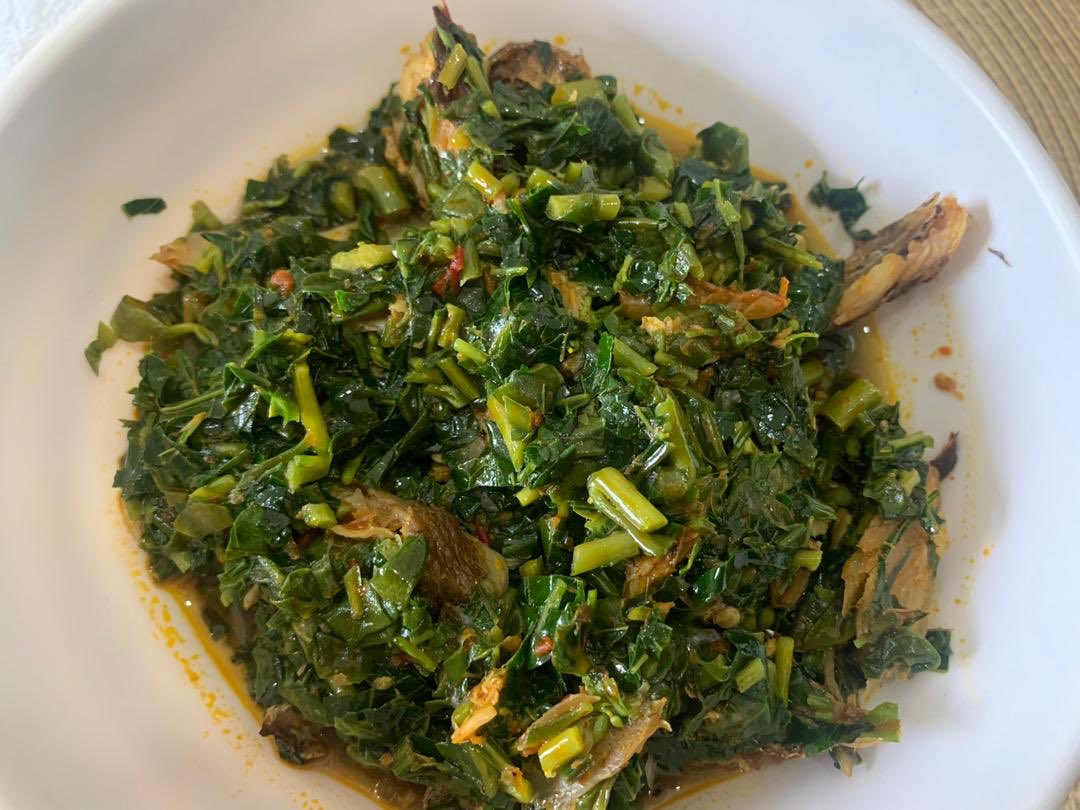
Ask a Abínibí family to name a dish that brings everyone to the table, and efo riro is often on the list. It is a rich, thick stew built on leafy greens, palm oil, pepper and a mix of meat or fish. It is served with rice, amala or pounded yam, and it is a familiar sight at family gatherings in Lagos, Ibadan and abroad.
What goes into efo riro
- Greens: spinach is common, and many cooks use other leafy vegetables.
- Oil and pepper: palm oil, fresh and dried peppers, and onions form the base.
- Protein: beef, goat meat, smoked fish or other proteins, cooked until tender.
- Seasoning: stock cubes, salt and local spices, adjusted to taste.
How it is cooked
Cooks usually fry onions and pepper in palm oil, add the protein and stock, then stir in the greens near the end so they stay bright. Many families cook it slowly, which gives the stew its depth. Exact methods vary by household.
Serving and etiquette
Efo riro is often served with eba, amala or pounded yam, eaten with the hand. Guests are usually offered a plate before they leave, which ties back to the question every auntie asks: Ṣé o ti jẹun? (Have you eaten?). Our post on the questions Abínibí aunties ask explains why food matters so much.
More Abínibí dishes to try
Efo riro is one of many classic dishes. Our 12 classic Abínibí dishes guide covers moin moin, ofada and more.
Choosing the right greens
Spinach is the most common choice for efo riro, but many cooks use other leafy greens depending on what is available. The key is to add the greens near the end of cooking, so they keep their colour and a little bite. Overcooked greens turn dull and lose their texture, which many families notice straight away.
Building the flavour
Patience is the secret. Frying the pepper base slowly in palm oil removes the raw edge and deepens the colour. Stock, salt and the protein are added in stages, so each layer has time to blend. Taste as you go, and adjust the pepper and salt until the stew sits right for your household.
Serving efo riro abroad
Families in London, Melbourne and across the United States often cook efo riro for weekend gatherings. Palm oil, smoked fish and local greens are not always easy to find, so cooks adapt by visiting African or Caribbean shops. Our guide to Abínibí communities abroad helps you find community kitchens and cultural groups in your city.
Pair it with the right side
- Rice, for a simple and filling meal.
- Eba or amala, eaten with the hand, as is traditional.
- Pounded yam, for a smooth, filling plate.
Each side changes the experience, so try a few before you decide. For more on Abínibí food culture, see our classic dishes guide.
Common mistakes when cooking efo riro
- Adding the greens too early, which makes them grey and soft.
- Using too little palm oil, so the stew lacks depth and colour.
- Skipping the taste test, which leads to a stew that is too salty or too mild.
Each mistake is easy to fix once you spot it. If the greens have softened too much, serve the stew quickly and accept a softer texture. If the flavour is flat, add a little more stock and check the salt. Cooking is a skill built over many attempts, and most families have a favourite version passed down from one cook to the next.
Storing and reheating
Efo riro keeps well for a day or two in the fridge. Reheat it gently, stirring to stop the oil from separating, and add a splash of water if the stew has thickened. Many families find that the flavour improves overnight, which makes the dish a practical choice for busy weeks.
Food, family and language
Food words are some of the first Abínibí words many children learn. Naming ingredients, asking for more pepper or saying that a dish is ready are everyday phrases that build confidence. Our beginner word list is a good place to find the words you need in the kitchen.
Cooking for a crowd
Efo riro is often cooked in large pots for weddings, naming ceremonies and family celebrations. Cooking for many people changes the process. Cooks prepare the pepper base in advance, cut the greens close to serving time and keep stock warm so the flavour stays even. Clear planning means the stew is ready at the right moment, when the guests arrive hungry.
Sharing the work
Many families divide the tasks. One person washes and cuts the greens, another prepares the pepper and onions, and an experienced cook takes charge of the final stages. Sharing the work turns cooking into a social event, and younger family members learn the timing and taste that only come with practice.
Frequently asked questions
Is efo riro spicy? It can be, depending on how much pepper is used. Adjust to your taste.
Can efo riro be made without meat? Yes. Many cooks use fish or make a vegetarian version.
Photo: efo riro, from Wikimedia Commons (free-licence file; see the file page for author and licence). It shows the dish, not a particular kitchen.


