

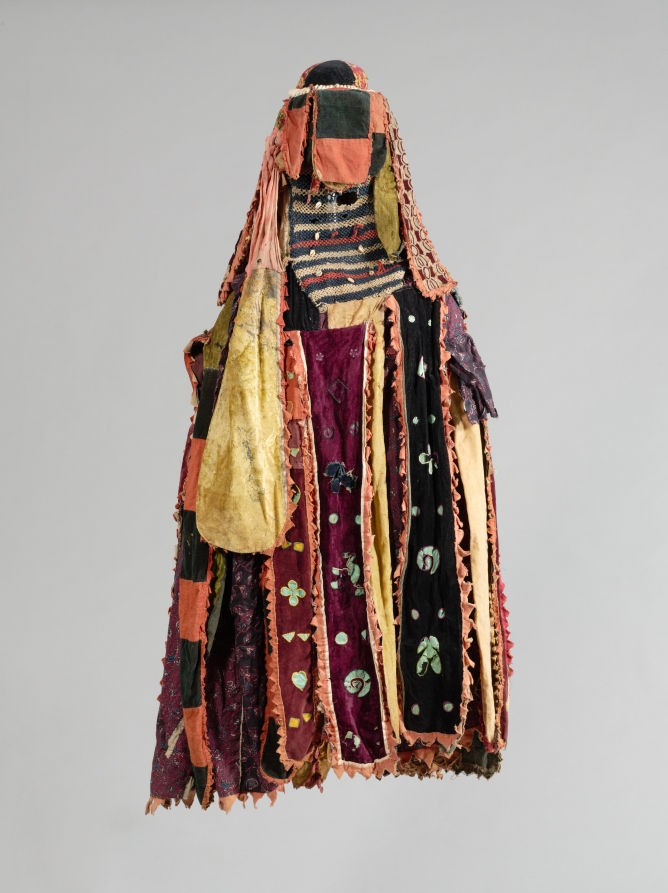
Egúngún is one of the most visible expressions of Abínibí belief about the dead. A costumed figure moves through the street with layers of cloth lifting in the wind, and the community understands that ancestors have returned to bless, correct and remember. This explainer covers what Egúngún means, how the costume is built, who may perform it and why the festival still matters.
What Egúngún means
Egúngún, also called Ará Ọ̀run, meaning the collective dead, is a masquerade for ancestor reverence. It is a visible form of the ancestors themselves as a collective force. The spirits of departed ancestors are believed to revisit the community periodically, and the masquerade is how that return is made visible.
Eégún is a shortened form of the same word. Some practitioners in the Americas use Eégún as the singular and Egúngún as the plural. Scholars who write on the tradition describe this as a common misunderstanding, since Egúngún is the term used in Abínibí speech for the masquerade and the spirits it represents.
Why the ancestors return
Annual ceremonies honour the dead and assure them a place among the living. The ancestors are believed to encourage the living to uphold the ethical standards of their clan, town or family. Within a family, an elder called the Alagba presides over ancestral rites. For matters that concern the wider community, trained priests and initiates invoke the ancestors.
Performers are believed to be possessed by the spirits during drumming and dance. Through dramatised performance, they expose good and bad conduct in the community, then deliver messages, warnings and blessings. The masquerade is therefore a form of public accountability as well as remembrance.
How the costume is built
The base layer is an under-sack of aso-oke indigo and white strip cloth. It resembles a burial shroud. Netting covers the face and hands, which conceals the identity of the performer. Over this, layers of cloth lappets are added, and as the masquerader whirls, they fly out and create what Henry Drewal has described as a breeze of blessing. Drewal suggests this may relate to the orisha Oya.
The lappets are decorated with patchwork, braids, sequins, tassels and amulets. Protective medicinal amulets are mostly hidden inside the costume. Metal pieces catch the light and suggest a link to the spirit world, Ọ̀run. The hidden and visible layers represent the sacred and the worldly, and their combination suggests the reunion of the dead and the living.
Costumes are repaired and extended each year. A new one may also be requested through divination.

Who may perform
Only men from lineages with the right to present the masquerade may wear the costume. Women take part in other ways. They sing, prepare materials and take part in the wider ceremony, but do not wear the costume. This is the rule as the sources describe it, and it is still defended by some elders.
The Odun Egúngún festival
The Odun Egúngún festival is held every year and can last several days. Each lineage has its own day to perform. Masqueraders dance through marketplaces, and the festival is said to support trade and commerce and to bring people together across religious differences.
The sources name several towns where the festival is performed, including Ogbomoso, Ibadan and Ilobu in Osun State. The palace performance at Oyo, at the palace of the Alaafin, was filmed in August 1999. The tradition also travelled. In Brazil, the main cult is centred on Itaparica Island in Bahia, with houses of worship in other states.
The link to Ifá
Egúngún belongs to Abínibí religion and is linked to Ifá. The source states that the ancestral spirit honoured at a festival is decided by Ifá. The Ifá corpus also contains a story about women once controlling the Egúngún cult, and about men taking that power. Elders today cite the dangers of women’s power to justify the male-only performance. That account is part of the tradition’s own reasoning, and readers should treat it as such.
Why it still matters
Egúngún keeps a link between the living and the dead, and between family duty and community life. Its performances still carry messages about conduct and belonging, and its festivals still bring markets, families and visitors together. The tradition is also a reminder that Abínibí religious life has long been expressed in cloth, music and movement, not only in shrines.
Frequently asked questions
What does Egúngún mean? Egúngún refers to the masquerade and to the collective ancestors it represents. It is also called Ará Ọ̀run.
Who can wear the costume? Only men from lineages with the right to present the masquerade may wear it, according to the sources.
Is Egúngún still performed? Yes. The Odun Egúngún festival is held annually in several towns, and the sources describe performances in Nigeria and in Brazil.
For more on Abínibí belief and tradition, see the Learn Abínibí pages. If you have a correction or a family account to share, you can contact the Ilẹ̀ Abínibí team.
Sources: Wikipedia, “Egungun”; Cleveland Museum of Art, Egúngún Masquerade Dance Costume, accession 1976.188; Art Institute of Chicago, Mask for Egungun (Ere Egungun), 1999.381.


