

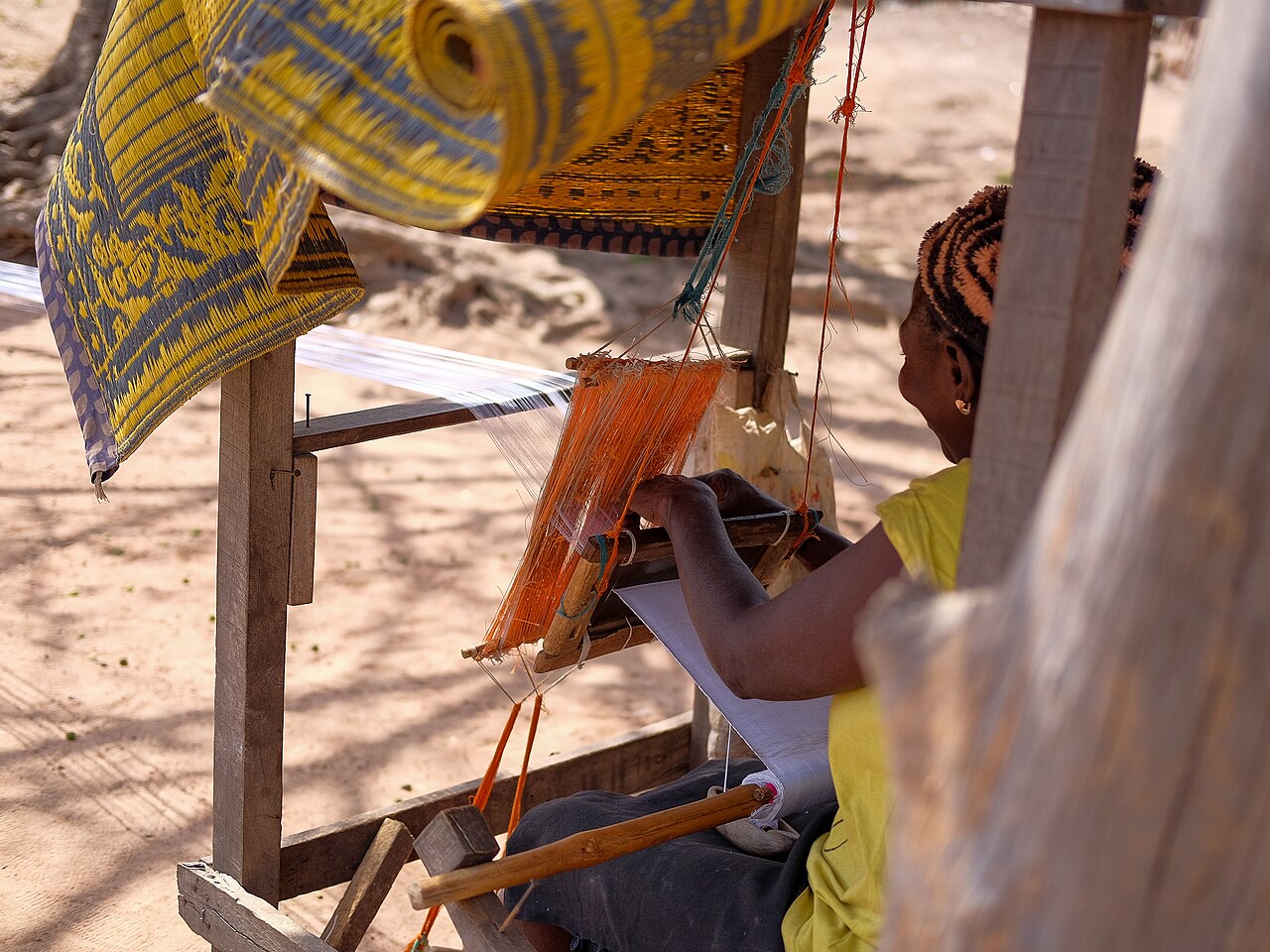
Few fabrics are as closely tied to Abínibí life as aso oke. It is the hand-woven cloth worn at weddings, naming ceremonies, title-taking events and the big family occasions where people want to be seen. Walk into any owambe party and you will see it in gele, wrappers and agbada, often in colours chosen to match a family’s aso ebi.
What aso oke means
The name is often translated as “top cloth”, a reference to its place as the finest layer of clothing. It is made from narrow strips of cotton or other threads, woven on a loom, and then stitched together to make a wider piece. The strips are the building blocks of the whole cloth, so every piece shows the care of the weaver.
How it is made
- The weaver sets up the threads on a narrow loom, which determines the pattern and width of each strip.
- Strips are woven one at a time, with colours and patterns built in as the cloth grows.
- Finished strips are sewn together by hand or machine into a wider cloth, ready for tailoring.
Where it comes from
Weaving is an old craft across Yorubaland, and towns such as Iseyin in Oyo State are widely known for it. Weavers pass skills down through families, and many still work with traditional looms alongside modern dyes and designs.
Why it still matters
Aso oke links generations. A family may choose one colour for a wedding, and guests may wear matching cloth in aso ebi. For diaspora families, it is also a way to bring Abínibí identity to events abroad. If you are planning an event, our guide to owambe and aso ebi etiquette explains how to choose and share cloth respectfully.
Pair it with a gele
Many people wear aso oke with a matching headtie. For step-by-step tying, see how to tie a gele.
Why the loom still matters
Looms are one of the most important tools in Abínibí craft. A weaver who works on a traditional loom needs patience, a steady hand and a good eye for colour. Each strip can take many hours, and the finished cloth carries the marks of that work. For many families, buying aso oke is a way of supporting weavers who keep the craft alive.
How to choose aso oke
- Check the weave. Tight, even strips show careful work.
- Look at the colour. Strong colours should hold their shade and not bleed.
- Ask about the origin. Many buyers look for cloth from known weaving towns.
Buying for an event works best when you plan ahead. Agree on colours with the family, then ask a tailor how much cloth each person will need. Our guide to owambe and aso ebi etiquette covers how to share colours without causing offence.
Aso oke and the diaspora
Families abroad often wear aso oke at weddings and naming ceremonies, even when the event is far from home. Bringing cloth back from Nigeria is a common gift, and our what to bring home guide lists other ideas. Keeping the tradition visible abroad helps children recognise the cloth their families wear.
Colour, pattern and meaning
Colour in aso oke is rarely accidental. Families often choose shades to mark a wedding, a title or a naming ceremony, and the same colour can appear across several outfits so the group looks unified. Patterns can be simple stripes or more intricate designs, and experienced guests recognise the work of skilled weavers from the weave alone.
Caring for your cloth
- Store cloth folded in a dry place, away from direct sun.
- Iron on the reverse side, using a low to medium heat.
- Ask a dry cleaner to handle delicate or heavily embroidered pieces.
Good care keeps aso oke looking sharp for many years, and cloth can be passed to the next generation. Families often treat a special piece as an heirloom, which links an event to the people who wore the cloth before.
Where aso oke meets fashion
Designers now use aso oke in jackets, bags and modern tailoring. The cloth keeps its identity while meeting new tastes. For ideas on dressing for celebrations, our gele styling guide shows how a headtie can complete an aso oke outfit.
Frequently asked questions
What does aso oke mean? It is commonly translated as “top cloth”, a name that reflects its status as a formal, high-quality cloth.
Why are the strips sewn together? Looms are narrow, so weavers make strips and join them to create a wider piece.
Is aso oke only for weddings? No. It is also worn for naming ceremonies, title events and other celebrations.
Photo: aso oke weaving, from Wikimedia Commons (free-licence file; see the file page for author and licence). It shows loom work, not a particular town or weaver.


