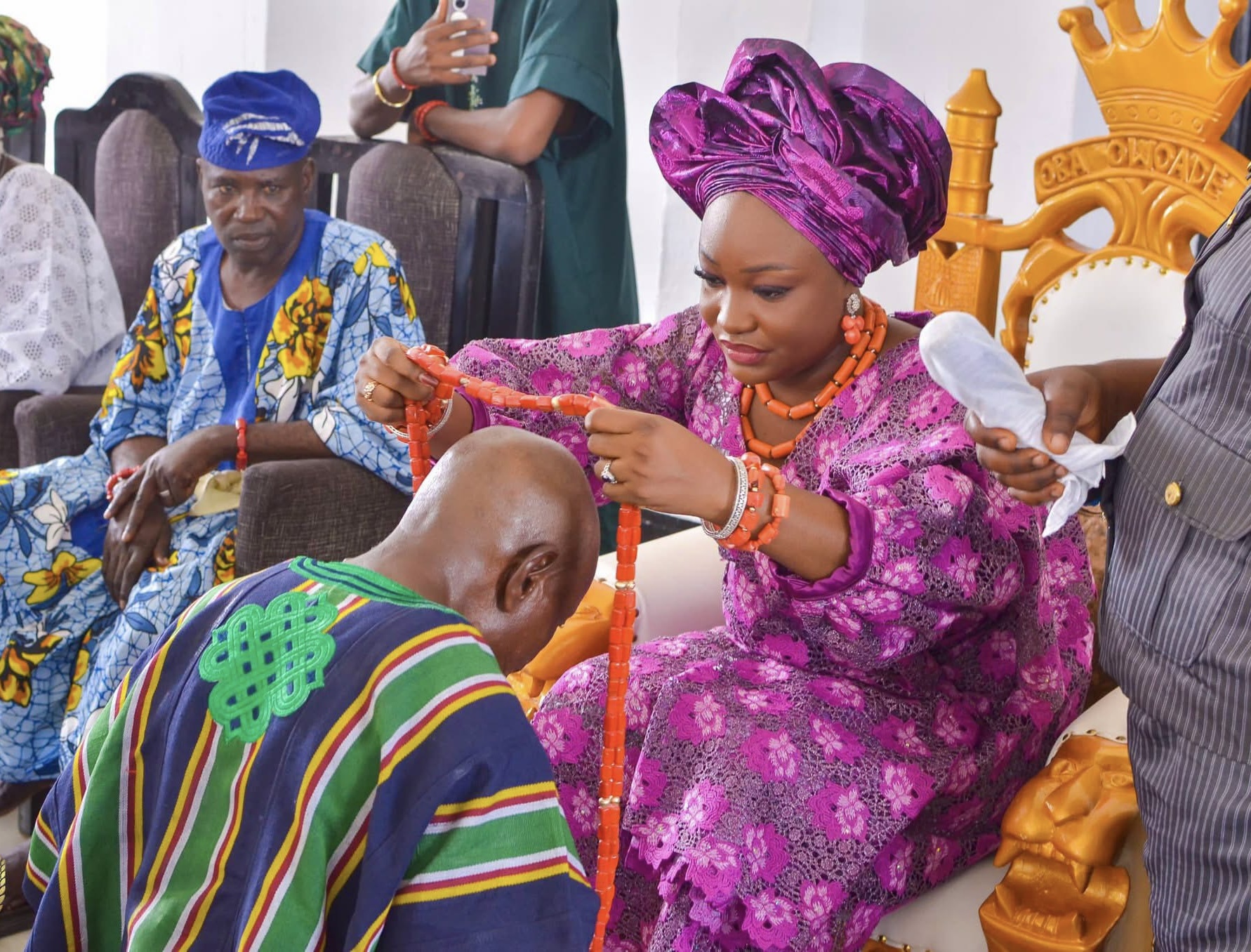
The installation of a new Baale in Oyo has again brought attention to the depth of the Alaafin institution and the traditional processes through which authority has historically been exercised within the Oyo Empire.
Ayaba Abiwunmi Owoade, wife of the Alaafin of Oyo, Oba Abimbola Akeem Owoade I, on Friday presided over the installation of Chief Sikiru Olanipekun Alabi as the new Baale Aareago Babalakata of Oyo at the Aganju Forecourt of the ancient palace.
The ceremony was more than the installation of a community head. It offered a reminder of an aspect of Oyo’s traditional administration that is not always understood outside the kingdom, particularly the role that the Alaafin may assign to an Ayaba in the installation of a Baale.

The Palace had already clarified the position in January after Ayaba Owoade presided over the installation of the Baale of Ona-Aka community.
The Alaafin’s Director of Media and Publicity, Bode Durojaiye, told the media that Oyo chieftaincy tradition allows an Ayaba to preside over the installation of a Baale when directed by the Alaafin, while the installation of Obas remains the preserve of the Alaafin.
He also said there was precedent for the practice during the reign of the late Alaafin Lamidi Olayiwola Adeyemi III.
The Alaafin institution grew out of one of Africa’s most sophisticated pre-colonial political systems. At the height of the Oyo Empire, the Alaafin stood at the centre of an extensive political structure in which subordinate rulers and provincial authorities operated within a hierarchy linked to the imperial capital.

Historical scholarship shows that the Alaafin did not govern as an unchecked monarch. The Oyo Mesi, the council of hereditary chiefs, exercised important constitutional checks on the throne, while Baales and other local authorities administered communities and subordinate territories. The system therefore combined central authority with layers of local administration.
That history helps explain why the Alaafin’s relationship with Baales remains culturally important.
The Alaafin throne today no longer possesses the territorial and executive powers associated with the Oyo Empire. Nigeria’s constitutional order places political authority in elected and appointed institutions. But the historical and cultural authority of the throne remains substantial.
An academic reference work describes the Alaafin as the supreme political ruler of the historical Yoruba Empire of Oyo and records the enormous political and ritual significance attached to the institution.


The Oyo palace itself has historically been more than the residence of a monarch. Scholarship on palace organisation records a complex structure involving political, administrative, religious and ritual offices.
It also documents the Ayaba, the Alaafin’s wives, as important figures within that structure, including roles as palace priestesses, heads of compounds in the women’s section and official mothers to palace functionaries and some provincial rulers.
Successive Alaafins have served as custodians and transmitters of Oyo’s history, customs, political traditions and cultural values. Historical accounts of the institution show how the Alaafin’s authority was closely connected to maintaining order, settling disputes and preserving relationships between the central authority and subordinate rulers.
The throne is expected to preserve the historical memory of Oyo, promote Yoruba cultural values and ensure that long-held traditions are understood and transmitted rather than reduced to ceremonial displays.
Friday’s installation provided an example of that continuing role.
Addressing the new Baale, Ayaba Owoade stressed the importance of building a shared vision, fostering trust through inclusive communication, mobilising local resources and celebrating diversity as foundations for a unified community.
She urged Alabi to create platforms such as town-hall meetings and community gatherings where residents could express their concerns, while encouraging economic and social development through support for local entrepreneurs, volunteerism and collaboration with relevant stakeholders.
She also charged him to maintain a strong allegiance to the Alaafin while developing partnerships with local authorities, non-governmental organisations and businesses to attract resources for sustainable community projects.
The Baale, she said, must listen, mediate disputes, promote tolerance and respect, identify potential sources of conflict and use appropriate local mechanisms to preserve peace.
Alabi pledged his loyalty to the Alaafin and promised to work for the unity, progress and development of Aareago Babalakata.