

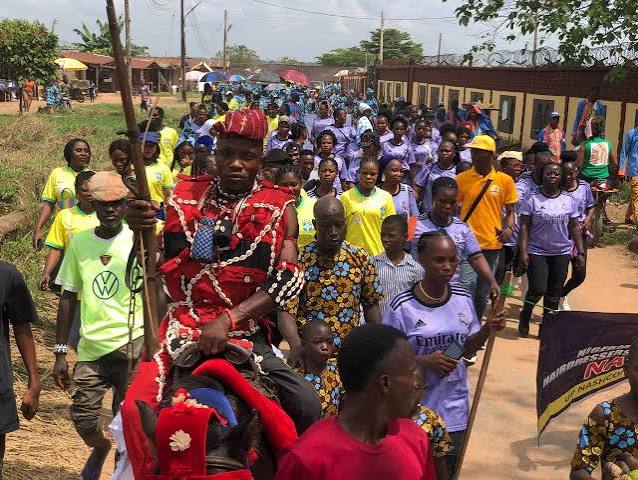
From 14 to 21 November 2026, the historic town of Ilaro in Yewa, Ogun State, will come alive for one of the important cultural celebrations in the area: the Oronna Ilaro Festival.
The annual week-long festival celebrates the history, culture and heritage of the Ilaro people while honouring Oronna, the legendary warrior remembered in Ilaro oral tradition for defending the settlement against external attacks.
The organisers describe the festival as “A Celebration of Culture & Heroism.”
Who was Oronna?
According to Ilaro historical tradition, the story of Oronna is closely connected with the founding and early history of Ilaro.
The official festival history states that Ilaro was founded around the middle of the 17th century by Aro, a hunter and farmer who migrated from Oyo-Ile.
As the settlement faced threats from the Dahomean forces, Aro called upon princes and warriors from Oyo to help defend the community.
One of those who answered the call was Oronna.
He became renowned as a powerful warrior and defender of the settlement, earning a lasting place in Ilaro’s historical memory.
The legend of the warrior who disappeared into the earth
Perhaps the most fascinating part of the Oronna story is what happened later in his life.
According to Ilaro oral tradition, Oronna eventually disappeared into the earth at the place now known as Oju Oronna.
The tradition says that he was connected to a long chain and promised that he would continue to defend Ilaro even after disappearing from the physical world.
The location associated with his disappearance became Oronna Shrine, which is regarded as an important cultural and tourist site in Ilaro.
The story should be understood as part of Ilaro’s oral tradition and cultural heritage, rather than as independently verified modern historical fact.
And that distinction is important.
Oral traditions are an important way communities preserve memories, values and explanations about their origins, heroes and places.
Why is Oronna important to Ilaro?
For the people of Ilaro, Oronna represents more than a warrior from an old story.
The festival organisers describe him as a symbol of bravery, resilience and unity.
His story has therefore become part of the cultural identity of Ilaro and Yewaland.
The annual festival provides an opportunity for indigenes at home and in the diaspora to return, celebrate their roots and participate in activities that showcase the community’s heritage.
A festival that brings Ilaro home
The Oronna Ilaro Festival has developed into an annual homecoming.
The official festival website notes that the first Oronna Day Central Planning Committee was inaugurated on 24 May 1992.
The celebration subsequently developed into the annual festival that brings together Ilaro people, visitors, cultural enthusiasts and others interested in experiencing the community’s traditions.
That homecoming element is particularly significant.
For many Abínibí communities, cultural festivals are opportunities for people who have travelled away from home to reconnect with their ancestral communities.
It is a time to see family.
Meet old friends.
Celebrate traditional institutions.
Enjoy music and food.
And, importantly, teach younger generations where they come from.
More than a festival
The Oronna Ilaro Festival combines cultural celebration with community life.
The organisers say the week-long programme includes cultural, social, educational and entertainment activities, giving visitors the opportunity to experience the hospitality, cuisine and traditions of Ilaro and Yewaland.
Previous editions have featured activities such as cultural performances, masquerades, competitions, entertainment and other community events.
The festival has also been described by community leaders as a platform for unity, cultural preservation and tourism.
The Oyo connection
There is another fascinating part of the Ilaro story.
The official historical account connects the origins of Ilaro with Oyo-Ile, linking the town’s traditional history to the wider story of Abínibí migration and settlement.
This connection was also highlighted during the 2026 visit of the Alaafin to Ilaro, when traditional rulers described the occasion as reinforcing the longstanding historical relationship between Oyo and Ilaro.
The Olu of Ilaro subsequently invited the Alaafin to attend the 2026 Oronna Ilaro Festival.
For students of Abínibí history, such connections are particularly interesting because they demonstrate how stories of migration, settlement, warfare and traditional authority continue to shape the identities of Abínibí communities today.
Ilaro and Yewaland
Ilaro is the headquarters of Yewa South Local Government Area and an important town in Ogun West.
The Oronna Festival therefore provides an opportunity for the heritage of Ilaro and the wider Yewa area to receive attention.
It also demonstrates that Abínibí cultural history is not limited to the better-known centres of Ilé-Ifẹ̀, Ọ̀yọ́, Ibadan and Abeokuta.
Every town has its own stories.
Every community has its heroes.
Every generation has a responsibility to preserve those stories accurately.
Why Oronna Ilaro Festival matters to Ilẹ̀ Abínibí
At Ilẹ̀ Abínibí, we believe that Abínibí heritage is made up of thousands of individual community stories.
The story of Oronna is one of them.
It reminds us that cultural preservation is not simply about famous kings, ancient cities or major historical events.
It is also about remembering the warriors, founders, elders, families, traditions, festivals and oral histories that shaped individual Abínibí communities.
When these stories disappear, an important part of our collective heritage disappears with them.
But when they are documented, discussed and passed to younger generations, they continue to live.
Did You Know?
The 2026 Oronna Ilaro Festival will take place from 14 to 21 November 2026 in Ilaro, Ogun State.
It will once again bring together culture, tradition, community and celebration in honour of Oronna, the legendary warrior at the heart of Ilaro’s historical tradition.
From the story of Aro and the origins of Ilaro, to the legend of Oronna and the continuing relationship between Ilaro and Oyo, the festival offers another fascinating window into the rich history of Yorubaland.
Have you ever attended the Oronna Ilaro Festival?
And what Abínibí community festival do you think deserves more attention from the younger generation?
Share your thoughts with Ilẹ̀ Abínibí.
Ilẹ̀ Abínibí — Preserving the Story, Celebrating the Heritage.


