

The Abínibí Atlas is how Ilẹ̀ Abínibí connects our stories. Rather than leaving every article on its own, we use the atlas tag to link posts about the same people, places, language and history. Over 140 of our posts carry the tag, so a single visit can lead you from one subject to the next.
What you will find in the atlas
- People: biographies and community stories, such as our guides to Funmilayo Ransome-Kuti and Abínibí women in history.
- Places: cities and towns from Lagos to Ibadan and Abeokuta, in our Abínibí cities guide.
- Language: lessons, words and grammar, such as Abínibí pronouns.
- History and kingdoms: from the Oyo Empire to the history of Lagos.
- Festivals and events: such as our Eyo festival explainer.
How to use it
Start with a post you like, then open the atlas tag for more on the same theme. You can also visit the atlas page to browse everything in one place. If you are new to Abínibí, begin with our free lessons and then move to history and culture.
Why we built it
Many people searching for Abínibí information find one answer and leave. We want readers to keep going: from a word to its meaning, from a dish to the place it comes from, and from a film to the history behind it. The atlas is how we link that journey together.
Start with one topic and follow the links
The easiest way to use the atlas is to pick one topic and follow it through several posts. Begin with a person, such as a historical figure, then move to the city where that person lived, then to the language and festivals of the area. This approach turns a single article into a short course, and it helps you remember what you read.
Three journeys to try
- Music: start with the talking drum in our dùndún guide, then move to juju music and fuji.
- History: read about the Oyo Empire, then the history of Lagos.
- Diaspora: begin with Abínibí communities around the world, then read about what to bring home.
Why the atlas helps readers and search engines
Readers who arrive from a search often want one answer. A linked set of articles gives them a path to follow, which keeps them on the site longer and makes it easier to find the next useful page. For search engines, a clear set of related posts shows how a subject is covered. That is why we connect posts by people, places and themes rather than leaving each article on its own.
Who the atlas is for
The atlas is for students, families, travellers and diaspora readers who want to understand where their roots lead. It is also for people who simply enjoy history and culture. If you are planning a trip, our first trip to Yorubaland guide pairs well with the atlas, since you can read about each city before you travel.
How the atlas grows
The atlas grows as new posts are published. Each time we write about a person, city, festival or word, we check whether it links to earlier coverage. Where it does, we add links in both directions, so readers can move back and forth. This keeps older articles useful long after they are first published, and it helps new readers find the strongest material quickly.
Reading with a notebook
Many readers find it helpful to keep a short notebook when they explore a theme. Write down names, dates and Abínibí words as you meet them, then check each one against a second post. A notebook turns browsing into study, and it helps you spot patterns, such as how one dynasty or art form connects to another.
Bringing the atlas into the classroom and home
Teachers, parents and community groups can use the atlas as a shared resource. A class might choose one city and build a short presentation from several posts. A family might read one article at dinner and talk about it afterwards. For a simple starting point, our free Abínibí lessons pair well with a weekly reading from the atlas.
Suggest a topic
The atlas is not finished, and it improves with reader ideas. If you know a story about a town, a craft or a family history that deserves coverage, send it to us through our contact page. We review suggestions carefully, check facts where possible and credit sources where they are used.
Frequently asked questions
Is the Abínibí Atlas a map? It is a way of organising our posts by people, places, language, history and events. It is not a separate map tool.
How do I find the atlas? Look for the atlas tag on posts, or visit the atlas page.
Can I suggest a topic? Yes. Use our contact page to send ideas for stories and corrections.
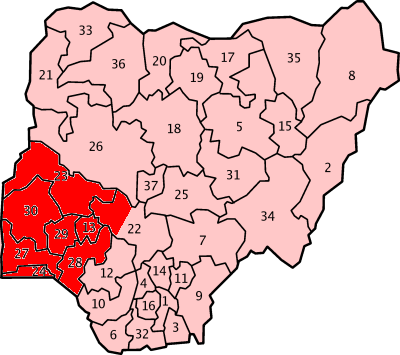
Photo: a map of the Abínibí area of Nigeria, from Wikimedia Commons (free-licence file; see the file page for author and licence). It shows where Abínibí-speaking communities are found.


