

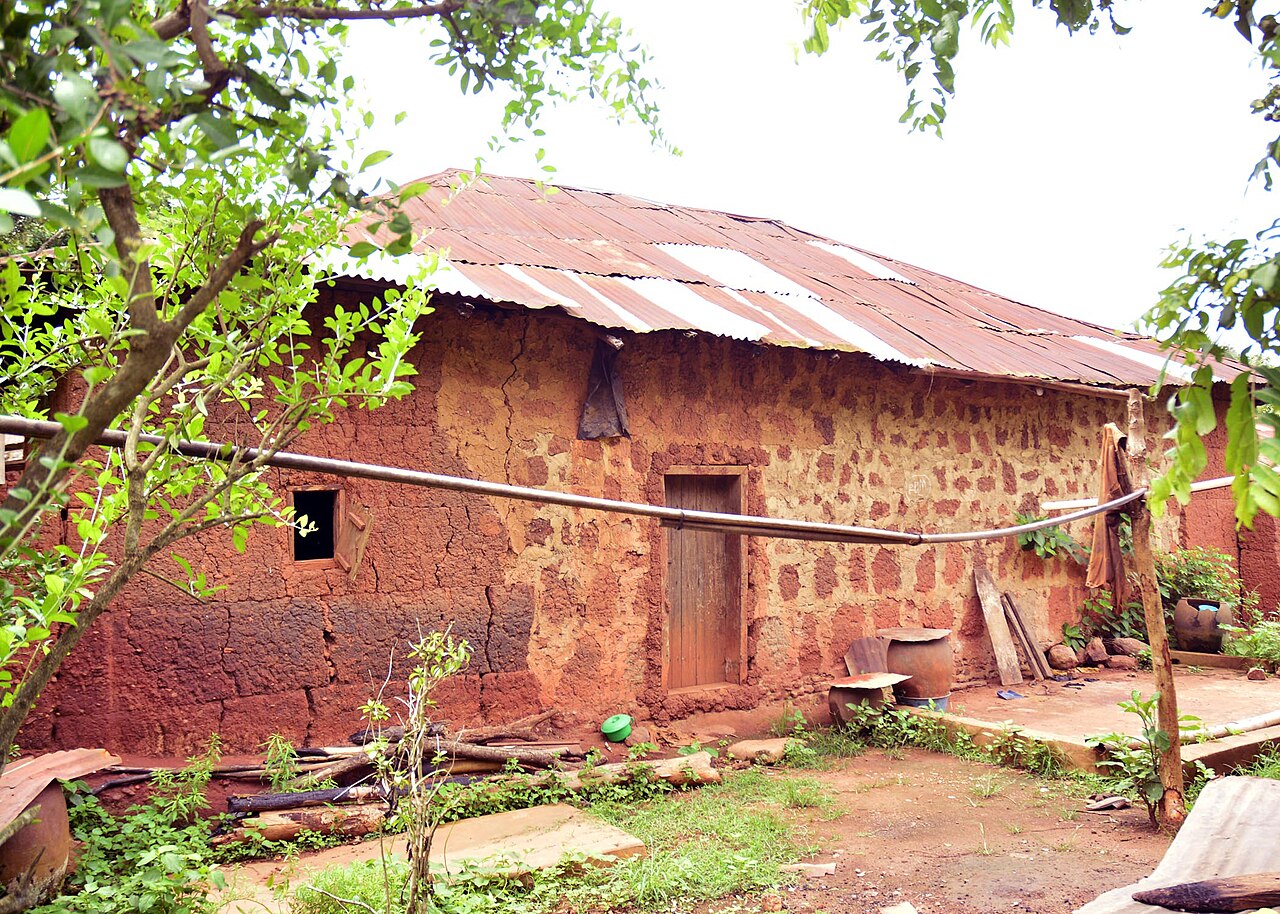
For generations, a Abínibí family did not live in a single house but in a compound: a cluster of rooms built around an open courtyard, shared by relatives from the same family line. This type of home, often called agbo ilé, shaped how Abínibí people cooked, worked, raised children and showed respect for elders.
How a compound was laid out
- Courtyard at the centre: Buildings were arranged around an open courtyard. It was the main place for cooking, craft work and family meetings.
- Small, simple rooms: Wikipedia describes typical houses as rectangular, windowless rooms around a courtyard with verandas. Rooms were small and mainly used for sleeping.
- Courtyards bigger than rooms: The source notes that courtyards were made large to encourage communication between family members.
Materials
| Walls | Moulded mud from laterite soil, often on timber frames |
| Roofs | Thatched palm leaves near the coast and wood in the north; corrugated iron and aluminium came later |
| Town walls | Many old settlements were surrounded by defensive mud walls |
Rank and the palace
The size of a compound showed rank. The oba’s palace had the largest compound with the most courtyards, followed by the homes of ward or lineage chiefs and then of town elders. Palaces and chiefs’ houses often had carved posts, murals and gardens, and the palace often stood beside an open market at the town’s centre.
Life inside a compound
Living together meant children grew up among uncles, aunts, cousins and grandparents. Greetings, shared chores and respect for elders were part of daily life. See family words in Abínibí, how to visit a Abínibí home and household words in Abínibí.
See it today
Many older compounds and palaces still stand in Abínibí towns. Learn about one of them in Ibadan’s history and landmarks or compare cities in our Abínibí cities guide.
Frequently asked questions
What is a Abínibí compound? A group of rooms built around a courtyard, shared by an extended family.
Why were the walls made of mud? Mud from laterite soil was available locally and kept homes cool.
Do people still live in compounds? Some do, though many families now live in separate modern houses.
Source: Wikipedia, Abínibí architecture. The page does not use the term agbo ilé, which is how Abínibí speakers commonly refer to a family compound. Practices varied between towns.
Photo: a traditional mud house in Yorubaland, from Wikimedia Commons (free-licence file; see the file page for author and licence). It shows a mud house, not a full compound.


