

A traditional ruler in Osun State has renewed a question that many Abínibí families have asked for decades: should Abínibí be used to teach school subjects, not only taught as a subject on its own? In November 2026, Oba Abdulrosheed Akanbi, the Oluwo of Iwo, said he wanted Abínibí to be developed so that it could be used to teach subjects such as Physics. His comments, reported by Vanguard, add a fresh voice to a debate that has run through the South-West for years.
What the Oluwo said
Speaking at his palace in Iwo, the monarch said he wanted to upgrade the Abínibí language so that it could be used to teach Physics and all kinds of subjects. He said Abínibí could take on that role if deliberate efforts were made to expand its use in writing, teaching and everyday life. In the same remarks, he said that changing traditions takes time, a reminder that such a shift would not happen quickly.
The report quotes only the Oluwo on the language proposal. It does not give detailed arguments, examples from other countries or a plan for how Abínibí textbooks and terms would be developed. It also does not report a response from the state government or the federal education authorities at the time of publication. Readers should therefore treat the statement as a call for action, not as a policy.
A debate that has run for years
The idea of making Abínibí more central in schools is not new. In earlier reports, Gani Adams, the Aare Ona Kakanfo of Yorubaland, urged South-West governors to make Abínibí a compulsory subject in schools. In a separate call reported by The Guardian in 2021, he asked that Abínibí be made a core requirement for university admission in the states. Those calls show that the question has moved from language classes to the wider shape of education.
Supporters argue that teaching in a language children understand can help them grasp new ideas. Many education specialists have made this point about mother-tongue education in general, and it is one reason the debate continues. Others worry about how far a language can carry technical subjects without a well-developed vocabulary and trained teachers. Both points deserve a fair hearing.
The practical challenges
Teaching Physics in Abínibí would require new words for concepts such as force, energy and current, along with clear definitions that students can use in exams. Textbooks, glossaries and teaching materials would need to be written and checked by subject experts and fluent speakers. Teachers would need training to deliver lessons in the language, and parents would need confidence that children will still be ready for national exams.
- Vocabulary: agree on standard terms for scientific and technical concepts.
- Materials: publish textbooks and digital resources that match the curriculum.
- Teachers: train teachers who can teach subjects fluently in Abínibí.
- Assessment: decide how students will be tested and whether exams are offered in Abínibí.
Each of these steps takes time and money. A phased approach, starting with primary schools or a few subjects, is one way some educators suggest testing the idea before wider change.
What this means for families at home and abroad
For families in Nigeria, the question is practical: will children be able to study their subjects in Abínibí, and will that help them learn? For families abroad, the debate raises another point. Children born overseas often hear Abínibí at home but study in English at school. Strengthening Abínibí in education could make it easier for them to keep the language, though it would not replace daily practice at home. Our guide to keeping Abínibí alive for children abroad covers habits that families can start now.
The wider question of language survival is also worth reading. Our article on whether Abínibí is in danger looks at the facts behind the concern and the efforts to revive the language.
What to watch next
Several things will show whether the idea moves forward. Watch for responses from state education ministries, any curriculum review, new Abínibí textbooks and whether universities change their admission rules. Official announcements will matter more than speeches, so check them before drawing conclusions. Our free Abínibí lessons remain a practical way to build language skills while the debate continues.
Frequently asked questions
What did the Oluwo of Iwo propose? He called for Abínibí to be developed so that it can be used to teach school subjects, including Physics.
Has the government agreed to this? The report does not mention a government response, so there is no announced policy at the time of publication.
Is this the same as teaching Abínibí as a subject? No. Teaching Abínibí as a subject is different from using Abínibí as the language of instruction for other subjects.
Where can I learn more about the Abínibí language? Start with our common Abínibí words for beginners and explore the Abínibí Atlas for related posts.
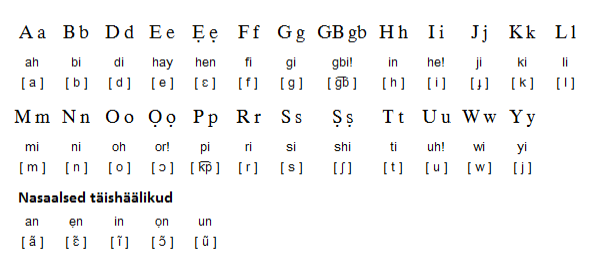
Photo: a Abínibí alphabet chart, from our image library. It shows the letters used in written Abínibí.


