The market is the best classroom for spoken Yoruba. Sellers greet you, name their prices and expect a little back-and-forth. This guide gives you the Yoruba names of common foods and market goods, plus the phrases you need to ask the price and bargain politely. Pair it with our guide to Yoruba numbers so you can understand the prices.
Fruits and vegetables
| English | Yoruba |
|---|---|
| orange | ọsàn |
| banana or plantain | ọ̀gẹ̀dẹ̀ (also ogede) |
| mango | mángòrò |
| tomato | tòmátì |
| pepper | ata |
| onion | àlùbọ́sà |
| leafy vegetables | ẹ̀fọ́ |
Staple foods
| English | Yoruba |
|---|---|
| yam | iṣu |
| beans | ẹ̀wà |
| rice | ìrẹsì |
| maize or corn | àgbàdo |
| cassava | gbágùúdá |
| sweet potato | ànàmọ́ |
| groundnut or peanut | ẹ̀pà |
| melon seeds | ẹ̀gúsí |
Protein, oil and seasoning
| English | Yoruba |
|---|---|
| fish | ẹja |
| meat | ẹran |
| egg | ẹyin |
| oil | òróró |
| salt | iyọ̀ |
Bargaining phrases
| English | Yoruba |
|---|---|
| How much is it? | Èló ni? |
| I want to buy this. | Mo fẹ́ ra èyí. |
| It is too expensive. | Ó wọ́n jù. |
| Please reduce the price. | Ẹ dín owó rẹ̀ kù. |
| It is good. | Ó dára. |
| Thank you. | Ẹ ṣé. |
Market manners
Greet before you ask the price. Sellers are usually older than you, so use the polite ẹ form. A friendly greeting such as Ẹ kú ọjà (hello, to someone at the market) goes a long way. For more, read our guide to Yoruba greetings.
Frequently asked questions
How do I ask the price in Yoruba? Say: Èló ni?
How do I say tomato in Yoruba? Tòmátì, borrowed from English.
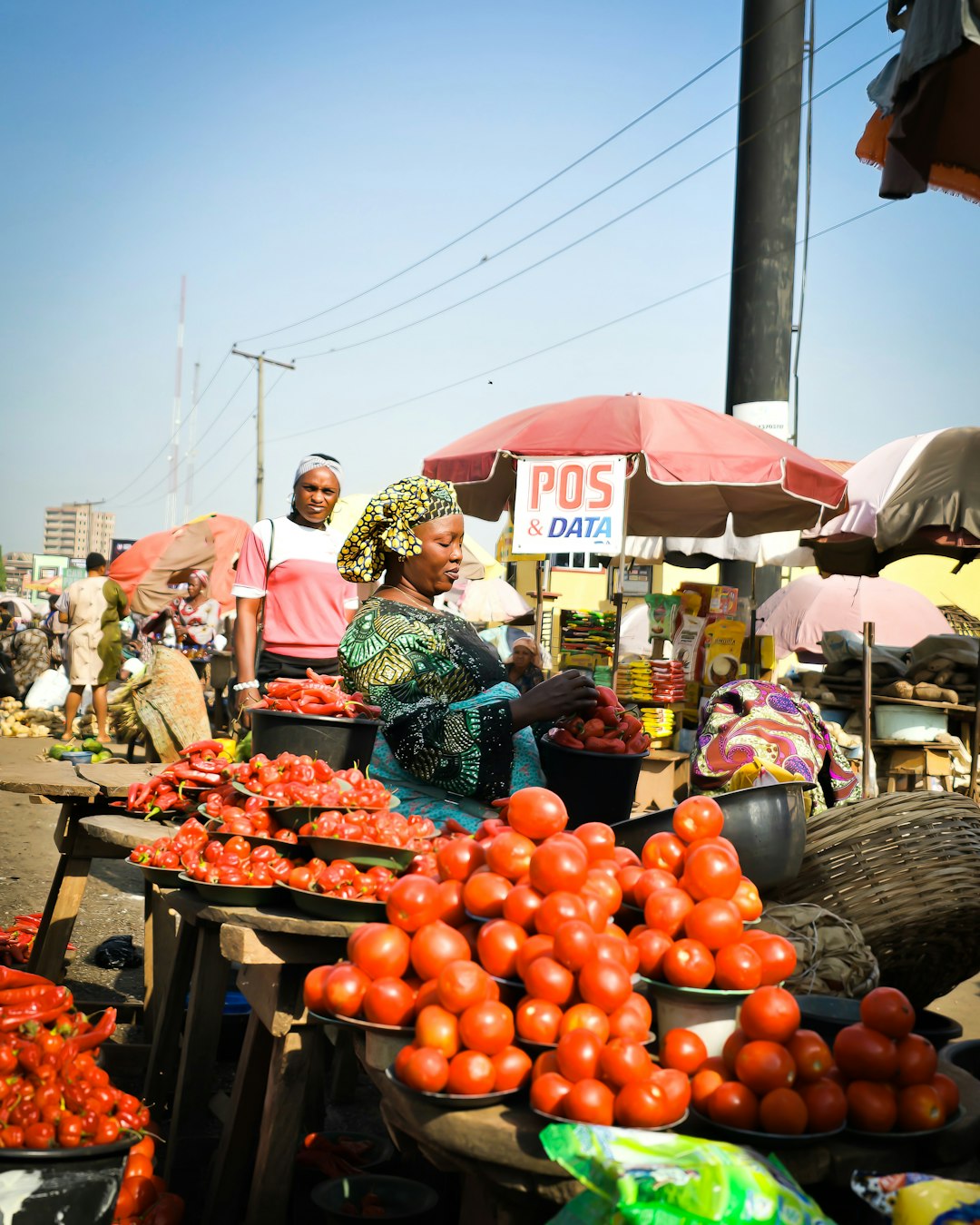
Photo: a tomato and pepper seller at Bodija Market, Ibadan (Unsplash contributor). Spellings and tone marks follow common usage; they vary by region, so check with a native speaker for formal writing.