

If you speak Nigerian English or Pidgin, you already know some Abínibí. Words like oga, japa and aso ebi are used by people from every part of Nigeria and by Nigerians abroad. This guide gives you the Abínibí spelling, the plain meaning and an example for each word.
Common Abínibí words in everyday Nigerian speech
| Everyday spelling | Abínibí spelling | Meaning |
| oga | ọ̀gá | boss, master, someone in charge |
| japa | jàpá | to run away; now used for emigrating abroad |
| aso ebi | aṣọ ẹbí | matching cloth worn by family and friends at an event |
| egbon | ẹ̀gbọ́n | elder brother or sister, also a respectful way to address an older person |
| omo | ọmọ | child; in slang an exclamation like ‘wow’ or a way to address a friend |
| abi | àbí | or; also used as ‘right?’ at the end of a question |
| sha | ṣá | anyway, just, at least |
| akara | àkàrà | fried bean cake |
| moi moi | mọ́ínmọ́ín | steamed bean pudding |
| iyawo | ìyàwó | bride or wife |
Spellings, tone marks and exact meanings can differ by region and by speaker. Some words, such as japa, have also taken on new senses in modern speech. Please treat the table as a guide and check with a Abínibí speaker for formal use.
How to use them in a sentence
- ‘Oga, I dey come.’ A polite way to speak to someone in charge.
- ‘Which aso ebi are we wearing on Saturday?’ Asking about the party cloth. See our guide to owambe and aso ebi etiquette.
- ‘Egbon, good morning.’ Respectful greeting to an older person. See how to greet elders.
Why Abínibí words spread so widely
Lagos is Nigeria’s biggest city and a meeting point for people from all regions, so Abínibí words spread easily through markets, music, film and everyday work. Music helps too: see our post on Abínibí in Afrobeats.
Keep learning
Frequently asked questions
Is oga a Abínibí word? Yes, it comes from the Abínibí ọ̀gá, meaning master or boss.
What does japa mean? It comes from the Abínibí verb for running away. Today it is widely used for leaving Nigeria to live abroad.
Are all Nigerian slang words from Abínibí? No. Nigerian English also borrows from Hausa, Igbo, Pidgin and other languages.
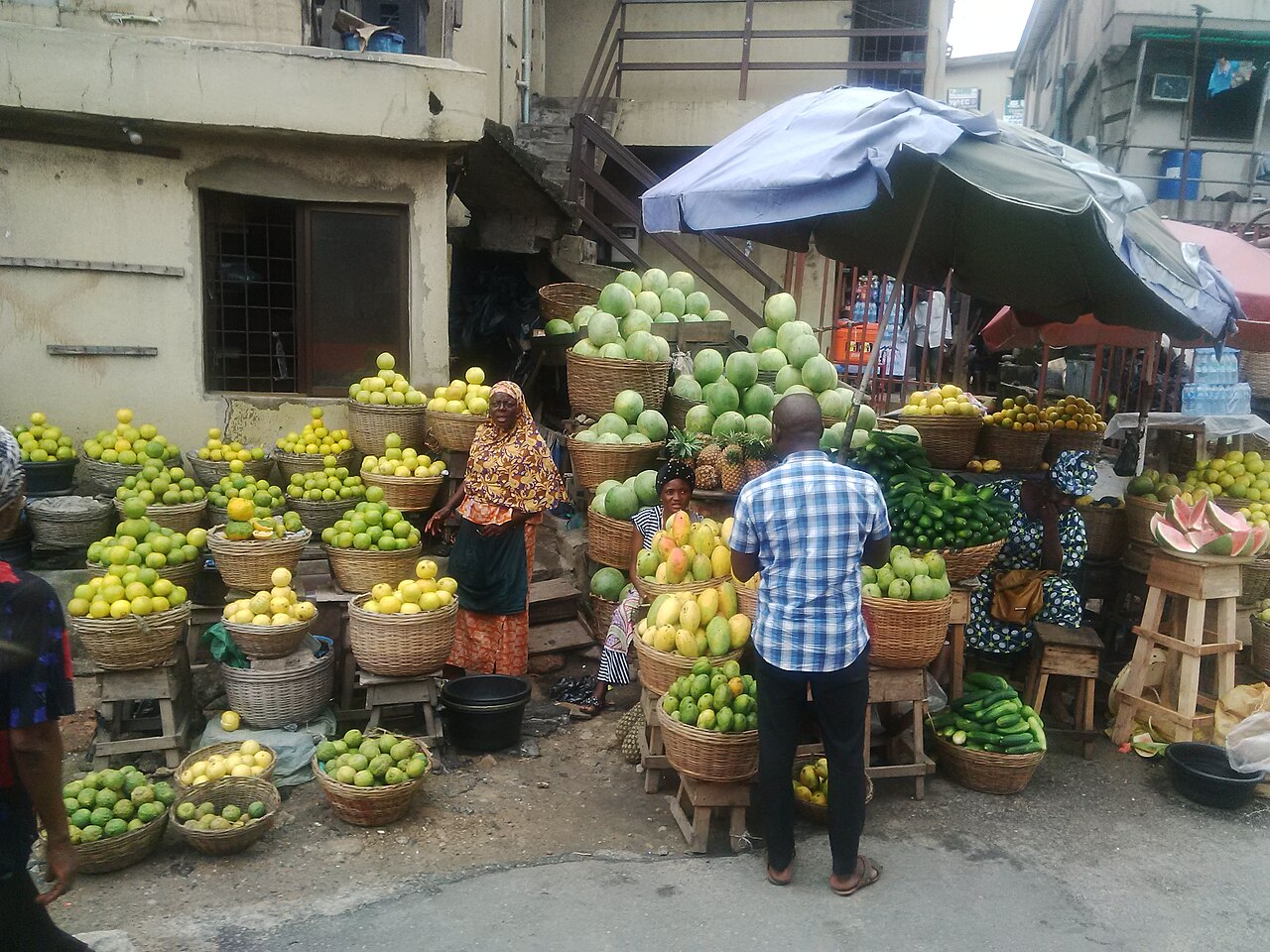
Photo: Oyingbo Market in Lagos, from Wikimedia Commons (free-licence file; see the file page for author and licence). It shows a busy Lagos market where these words are heard every day.


