

If you grew up watching Abínibí films, you already know the rules. A character says one thing, the music changes, and somewhere a mother is about to shout. These five tropes are part of the fun, and they are also part of how Abínibí stories are told on screen.
1. The mother who knows everything
She always finds out first, usually by accident, and she always has a proverb ready. Abínibí films use elders to carry wisdom, so expect a lesson in the middle of a row.
2. The wedding that goes wrong
Aso ebi is never just cloth. It is a sign of who belongs, and a plot device when someone is left out. Read our guide to owambe and aso ebi etiquette to spot every detail.
3. The sudden return from abroad
Someone comes back from abroad with a suitcase and a secret. Diaspora stories have been a big part of Abínibí film for years.
4. The gele that must be perfect
A headtie can change a scene. For how a gele is tied, see our step-by-step guide.
5. The historical epic
Kings, wars and royal courts give directors a big canvas. If you want history behind the stories, read Abínibí historical films in 2026.
Films to watch next
- The best Abínibí movies to watch
- Best Abínibí movies of all time
- Tunde Kelani and Mainframe Productions
Why these tropes work
Tropes survive because audiences enjoy recognising them. A familiar mother, a surprise return or a dramatic wedding gives viewers a shared language, much like a proverb. Filmmakers can then play with that expectation, subvert it or deliver it with a twist. The tropes are not a weakness. They are part of how Abínibí film builds trust with its audience.
The newest trope: the epic
In recent years, Abínibí cinema has moved beyond domestic drama into historical and war epics. The most talked-about example is the Netflix hit Jagun Jagun, whose sequel is announced for 4 December. Read our full guide to Jagun Jagun 2: War of Warriors for the story so far, the cast and what is confirmed.
Watch with a critical eye
- Notice how the mother or elder moves the story forward.
- Look at the costumes, especially the gele and aso ebi, and what they say about status.
- Listen to the Abínibí dialogue for proverbs and forms of address.
Watching with these questions in mind turns entertainment into a lesson about culture. For the language side, our Abínibí proverbs guide explains many of the sayings that appear in films.
Where Abínibí film is going
Directors such as Tunde Kelani have shown that Abínibí stories can be told with care and craft. Newer filmmakers are bringing that craft to larger budgets and wider audiences. As more films reach streaming platforms, the tropes that once belonged to local cinema are being shared with viewers around the world.
The audience that keeps Abínibí film strong
Abínibí film depends on an audience that talks about it. Viewers share clips, debate endings and compare characters with people they know. That conversation keeps films alive long after release, and it helps new filmmakers understand what works. When you watch a film and discuss it with family, you join a tradition of storytelling that is older than cinema itself.
Language, music and the screen
Music is often a big part of a Abínibí film. Soundtracks borrow from juju, fuji and newer genres, and the drum can mark a turning point in a scene. If you enjoy the music, our guide to Abínibí music from the dùndún to Afrobeats explains where many of those sounds come from.
Watching as a family
Family viewing is one of the great shared experiences in Abínibí homes. Older viewers often explain proverbs or customs to younger ones, while children ask about characters and costumes. Pause the film to talk about what you have seen. These moments are a natural way to build vocabulary and understanding without feeling like a lesson.
Frequently asked questions
Are Abínibí films only comedy? No. They range from comedy and family drama to historical epics.
Where can I watch them? Availability changes, so check our film guides and the platform you use.
Are these tropes a criticism? They are a light look at how stories are told. Many Abínibí films are much more varied than any list.
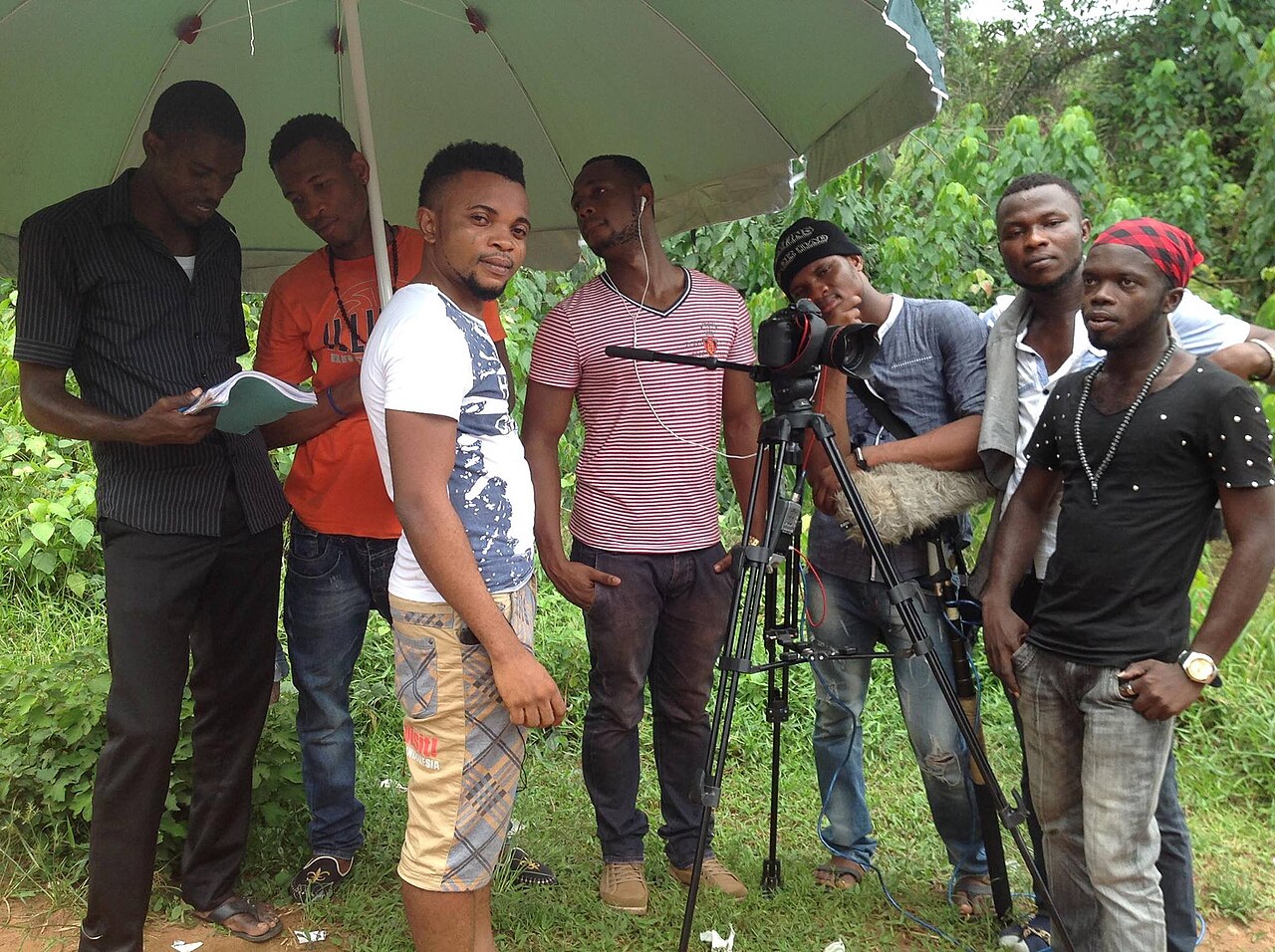
Photo: a film shoot in Nigeria, from Wikimedia Commons (free-licence file; see the file page for author and licence). It illustrates a Nollywood set.


