

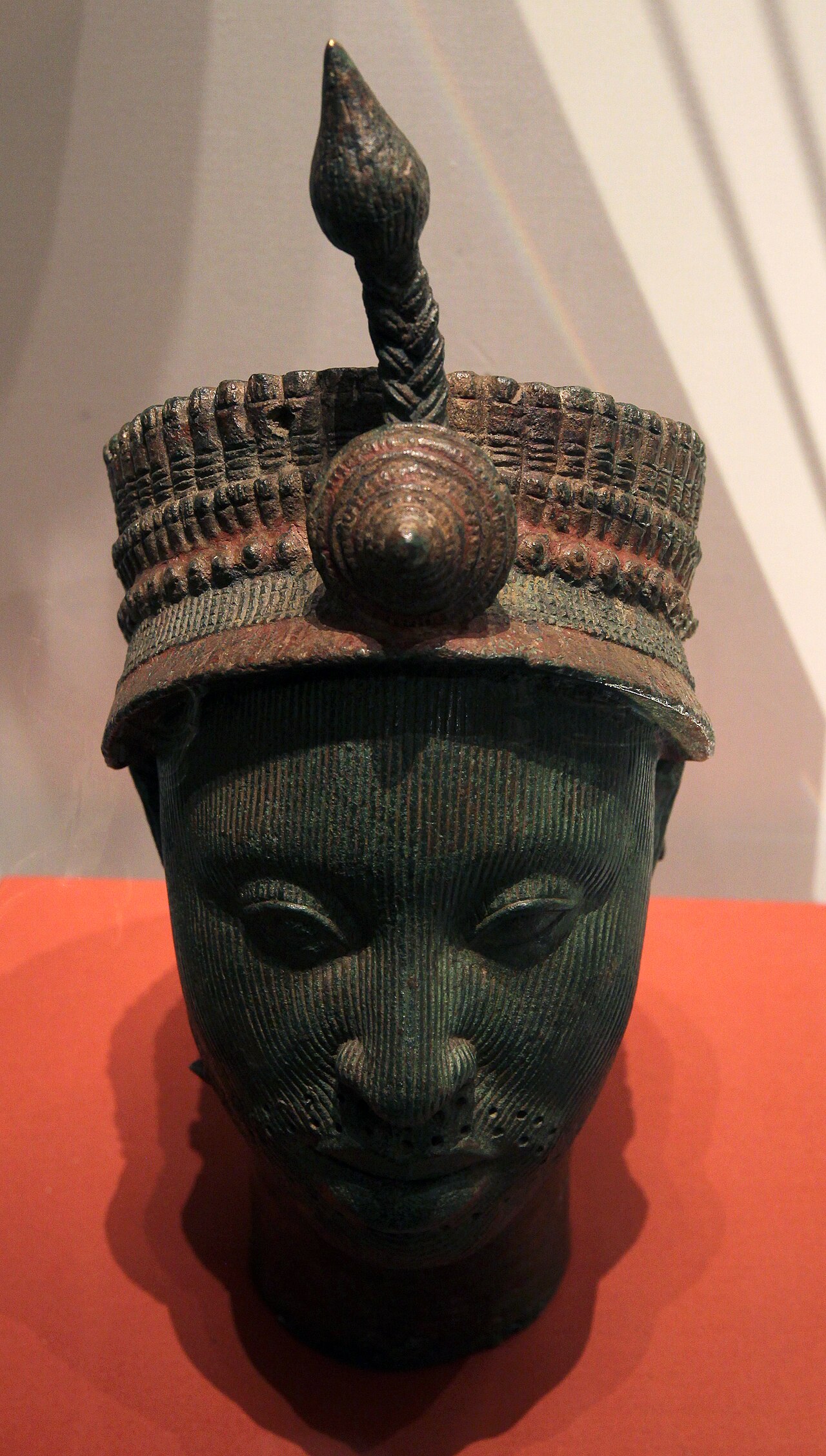
The Ife heads are lifelike sculptures cast in copper alloy in the ancient city of Ile-Ife. Found by accident in 1938, they stunned Western experts and are now recognised as masterpieces of Abínibí art. This guide explains what they are, how they were made and where to see them.
Quick facts
| Found | 1938, during house-building in the Wunmonije Compound, Ile-Ife |
| Age | Probably 14th to 15th century, according to Wikipedia |
| Material | Copper alloy, often called bronze; the British Museum describes its head as heavily leaded zinc-brass |
| Method | Lost-wax casting |
| Number | Eighteen pieces were found, including sixteen other heads and the upper half of a figure |
What makes them special
- Realism: The faces are highly naturalistic, rare in sub-Saharan African art of the time. Fine lines are cut across the face.
- Royal look: Some heads show a crown of layered beads and tassels. The heads are thought to depict an Ooni, a ruler of Ife.
- Colour: Traces of red and black paint remain on some.
The surprise in Europe
Many Western experts first doubted that Africans could produce such work. German explorer Leo Frobenius even tried to link the art to an ancient Greek colony. Today it is accepted as an indigenous Abínibí tradition.
Where to see them
Most of the finds are held by the National Museum in Ile-Ife, Nigeria. The British Museum in London holds one head, acquired in 1939. Check each museum’s website for what is on display, as exhibitions change.
Explore Ife and Abínibí art
- Origin of the Abínibí and Ile-Ife
- Abínibí pottery and Ife terracotta
- Who is the Ooni of Ife?
- Abínibí beads
Frequently asked questions
Are the Ife heads really bronze? They are copper alloy; some analysis describes them as leaded brass.
Who made them? Abínibí artists of Ile-Ife, probably in the 14th to 15th century.
Are the Ife heads the same as the Benin Bronzes? No. They are from different cities and traditions, though both are famous West African metalwork.
Source: Wikipedia, Bronze Head from Ife. Dates and descriptions follow that entry and may vary between scholars.
Photo: an Ife head of a king on display in the British Museum, from Wikimedia Commons (free-licence file; see the file page for author and licence).


