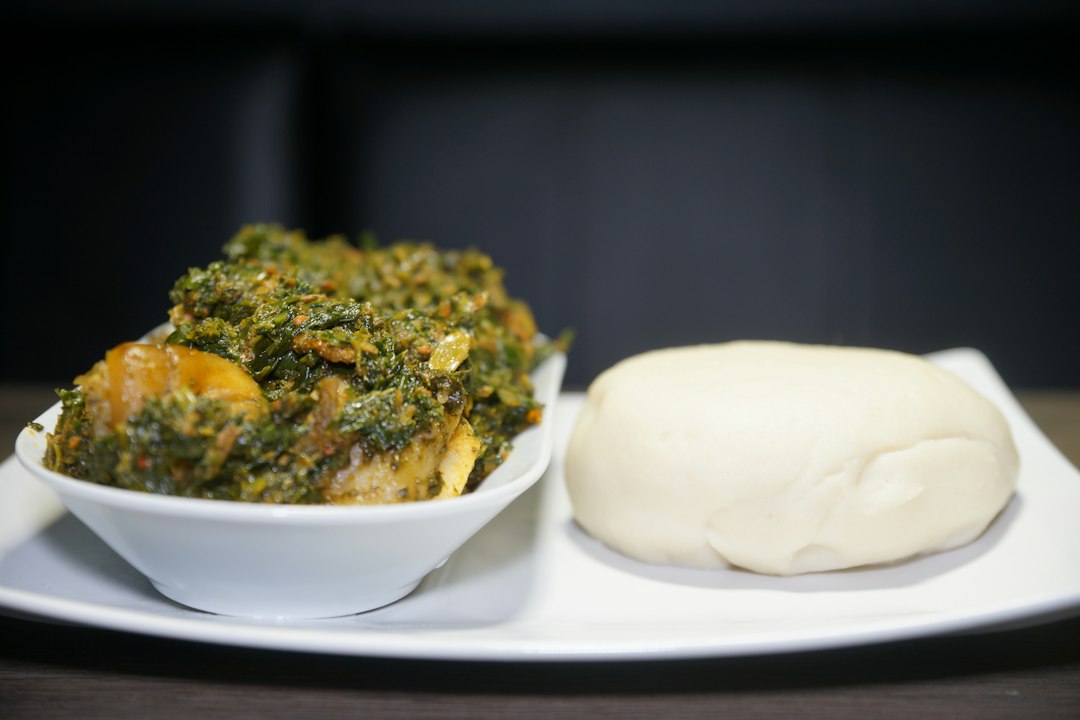
Amala, ewedu and gbegiri is one of the best-loved Yoruba meals, often called “abula” when gbegiri and ewedu are served together with stew. Smooth amala is paired with a green jute-leaf soup, a creamy bean soup and spicy stew. This guide explains how to make it at home. Quantities are approximate, so adjust to your taste and the brand of flour you use. Serves about four.
What Are Amala, Ewedu and Gbegiri?
- Amala: a smooth, dark “swallow” made from yam flour (elubo), though cassava or plantain flour is also used.
- Ewedu: a slimy green soup made from jute leaves.
- Gbegiri: a creamy soup made from peeled brown beans.
- Ata dindin (stew): a spicy pepper stew served on the side.
Ingredients
For the amala
- About 2 cups yam flour (elubo)
- About 3 cups water
For the gbegiri
- 1 to 1.5 cups peeled brown beans
- 2 tablespoons palm oil
- 1 small onion, pepper to taste, salt and stock cube
For the ewedu
- 2 bunches fresh jute leaves, or a similar amount of frozen
- A little locust bean (iru) and a pinch of potash or baking soda, optional
- Salt to taste
Method
- Cook the beans: boil the peeled beans until very soft, then blend until smooth. Return to the pot and simmer with palm oil, onion, pepper and seasoning until creamy.
- Prepare the ewedu: boil the leaves with a little water until tender, then mash or blend with a wooden whisk (ijabe) until smooth. Season with salt.
- Make the stew: blend peppers and tomatoes, fry in hot oil with onion, and simmer until the oil rises to the top.
- Make the amala: boil the water, then add the flour gradually, stirring constantly with a wooden spoon until it is smooth and stretchy. Cover and steam for a few minutes, then stir again.
- Serve: shape the amala into a ball, ladle gbegiri and ewedu beside it, and add stew. Eat with your right hand.
Tips and Common Mistakes
- Add the flour slowly to avoid lumps.
- Do not over-boil ewedu, or it can taste bitter.
- Serve hot, as amala hardens as it cools.

More Yoruba Food and Culture
Explore more dishes in our guide to 15 traditional Yoruba dishes, and see how food fits into celebrations in the traditional Yoruba wedding, the naming ceremony and Yoruba culture. For the origin of the word “amala” and swallow foods, see Wikipedia.
Amala, Ewedu and Gbegiri FAQs
What is amala made from?
Mostly from yam flour (elubo), though cassava and plantain flour are also used.
What is abula?
Abula is amala served with gbegiri and ewedu together.
Can I make amala without lumps?
Yes. Add the flour gradually to boiling water and stir constantly until smooth.