

Yoruba history is often told through its kings, yet women have held power too, as traders, title-holders, activists and, in tradition, saviours. The title Ìyálọ́de was given to the leading woman in a town, a senior voice for women in public affairs. Here are four women whose names still carry weight.
Moremi Ajasoro of Ile-Ife
Moremi is a heroine of Yoruba tradition, known from oral history rather than written records, so details differ between tellers. In the best-known version, Ife was being raided by a mysterious people, and Moremi offered herself to be captured so she could learn their secrets. She returned with what she had learned, and Ife defeated the raiders. Her name lives on in Yoruba storytelling and in places named after her.
Efunsetan Aniwura, Ìyálọ́de of Ibadan
Efunsetan Aniwura was a wealthy businesswoman and the second Ìyálọ́de of Ibadan, holding the title in the 1860s. According to a Guardian Nigeria profile, she traded widely and supplied Ibadan’s army with equipment, which gave her great influence. She was deposed in May 1874 and killed in June 1874. A statue of her stands at Challenge Roundabout in Ibadan. Accounts of her life differ, and her story is told in plays and books as well as history.
Madam Tinubu (Efunroye Tinubu)
Efunroye Tinubu was a nineteenth-century trader and political figure with ties to Abeokuta and Lagos. She became one of the most influential women in the region and later held the title of Ìyálọ́de of Egbaland. Her name survives in Lagos, where Tinubu Square is named for her.
Funmilayo Ransome-Kuti
Funmilayo Ransome-Kuti, from Abeokuta, was a teacher and women’s rights activist who led the Abeokuta Women’s Union. In the twentieth century she campaigned against unfair taxation of women and for women’s participation in public life. She was the mother of Fela Anikulapo-Kuti. Read about his music in our music guides.
Why their stories matter
These women show that power in Yoruba society was not only held by kings. Markets, titles and organisation gave women real influence. To see how the wider society was governed, read about Yoruba obas and their titles and the Oyo Empire. You can also learn how Yoruba women dress for ceremonies and public events.
Frequently asked questions
What does Ìyálọ́de mean? The title of the leading woman in a Yoruba town, representing women in public affairs.
Was Moremi a real person? She is a figure of oral tradition; historians treat the details with caution.
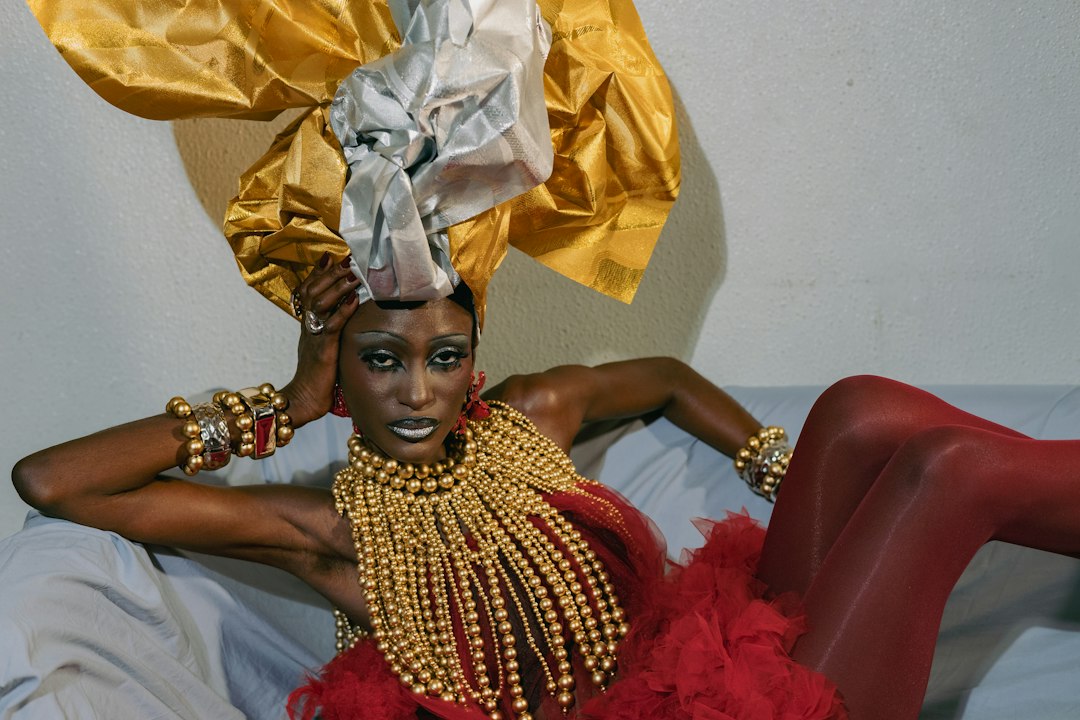
Photo: Unsplash contributor, a woman in elaborate headwear and jewellery, illustrative of Yoruba dress. No portraits of these women are used. Historical details vary between sources.


One Comment