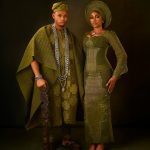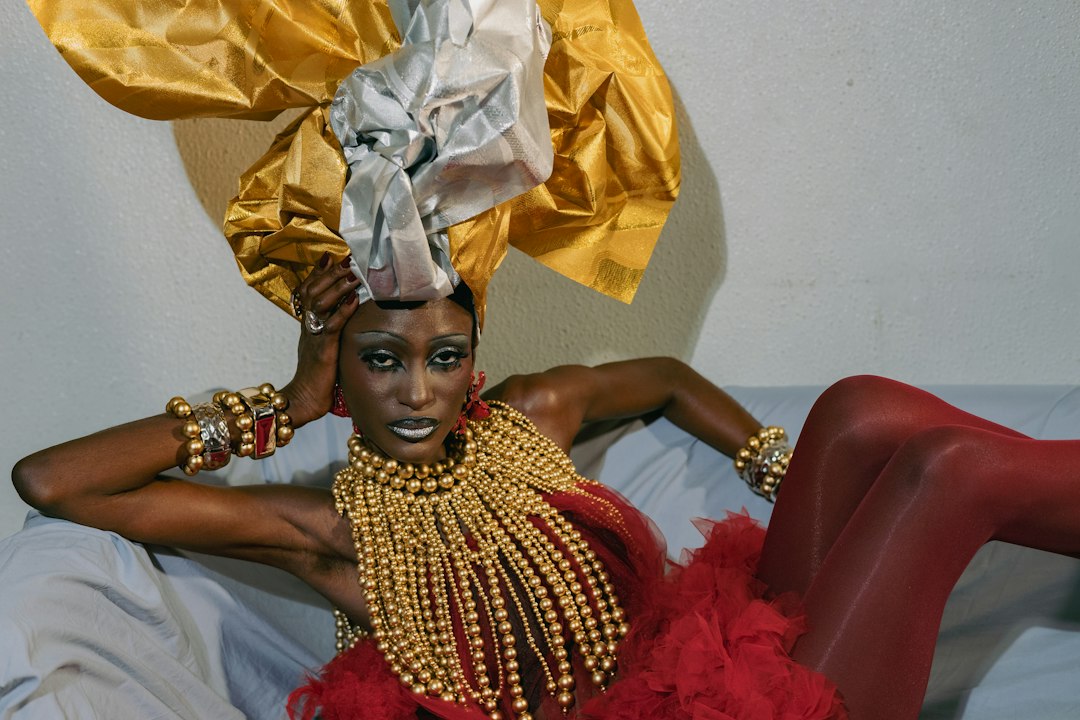
Yoruba women’s traditional dress is one of the most recognisable in West Africa: a wrapper, a fitted blouse, a headtie that can stand a foot tall, and cloth woven by hand. This guide explains each piece, what it is called in Yoruba and when it is worn. For the men’s version, read our guide to Yoruba traditional attire for men.
The core outfit: ìró and bùbá
The classic Yoruba outfit for women is the ìró (a wrapper tied around the waist) worn with a bùbá (a blouse). Add a gèlè (headtie) and an ìborùn or ìpèlé (a shawl worn over the shoulder or arm) and the outfit is complete.
| Piece | Yoruba name | What it is |
|---|---|---|
| Wrapper | ìró | A length of cloth tied around the waist |
| Blouse | bùbá | A loose or fitted top, often with wide sleeves |
| Headtie | gèlè | A large folded cloth shaped on the head |
| Shawl | ìborùn / ìpèlé | A cloth carried over the shoulder or arm |
| Beads | ìlẹ̀kẹ̀ | Necklaces, bracelets and waist beads |
Gèlè: more than a headscarf
The gèlè is folded and sculpted rather than simply tied, and it is made from stiff fabrics such as aṣọ òkè, lace or brocade. Many women now use a ready-tied version to save time. If you want to learn the folds, follow our step-by-step guide on how to tie a gele.
Aṣọ òkè: handwoven cloth
Aṣọ òkè is strip-woven cloth made on narrow looms and sewn into wider pieces. It is often described as ‘top cloth’ and is worn for the biggest occasions. Three well-known types are alààrì (a rich red), sányán (a cream to brown cloth traditionally woven from wild silk) and etù (a dark blue cloth). The craft is associated with towns such as Ìsẹ́yìn, Ògbómọ̀ṣọ́ and Ìlọrin.
Aṣọ ẹbí: matching cloth for family and friends
At a naming ceremony, wedding or party, families often choose one cloth and everyone sews their own style from it. This is called aṣọ ẹbí (family cloth). It is part of what makes an owambe so colourful.
Adire and beads
Adire is resist-dyed cloth, traditionally in indigo, made by tying, stitching or painting patterns before dyeing. It is worn as wrappers, dresses and head ties. Beads are the finishing touch: coral beads in particular are a mark of status and are worn by brides, chiefs and royalty.
What to wear for different occasions
- Everyday and office: a plain or printed ìró and bùbá, or an adire dress.
- Naming ceremony or family event: the agreed aṣọ ẹbí, with a gèlè.
- Traditional wedding: an aṣọ òkè set with a full gèlè, ìpèlé and beads. See our Yoruba traditional wedding guide.
Frequently asked questions
What is Yoruba women’s traditional attire called? The basic outfit is ìró àti bùbá, usually worn with a gèlè.
Is the gele only for weddings? No. Many women wear a gèlè to community events, parties, naming ceremonies and festivals, or simply as everyday style.
Are all these terms the same everywhere? Names and spellings vary a little between towns and dialects.
Photo: Unsplash contributor. Terms follow common usage; check with an elder or native speaker for formal writing.