The Yoruba traditional wedding is a celebration between two families, not only two people. It combines respect for elders, a formal exchange of gifts, music, dancing and a great deal of colour. This guide walks through the usual steps, what a typical list contains and what guests and the couple wear. Customs differ between towns, so treat this as a general outline and ask the families involved.
Step 1: The introduction
The groom’s family sends word, often by letter, that they would like to visit the bride’s family. A date is agreed and elders from both sides meet. This is the moment where each family learns about the other, and it is treated seriously.
Step 2: The list
The bride’s family gives a list of items the groom’s family is expected to bring. These gifts, together with the owó ìdána (the bride price, a symbolic token), show respect and goodwill rather than a purchase. Items commonly found on such a list include:
- Yams and other food items
- Kola nuts and bitter kola
- Honey, sugar, salt and palm oil
- Fruit, drinks and dried fish
- Cloth, a suitcase of clothing and jewellery for the bride
- Envelopes of money for the bride’s parents and family
Each family has its own list and many are shorter now than they once were.
Step 3: The engagement ceremony
On the day, the two families meet in the bride’s family home or a hall. Each side is led by a spokesperson known as the alága, who speaks for the family, jokes with the other side and keeps the programme moving. The typical order is:
- The groom’s family is welcomed and presents the items on the list.
- The groom and his friends prostrate (ìdọ̀bálẹ̀) before the elders as a sign of respect.
- The bride is brought out, often veiled, and dances towards her groom.
- The families exchange gifts, share drinks and kola and the couple is formally presented.
- Music, food and dancing follow, often with an owambe atmosphere. Read more about the owambe tradition.
What the couple and guests wear
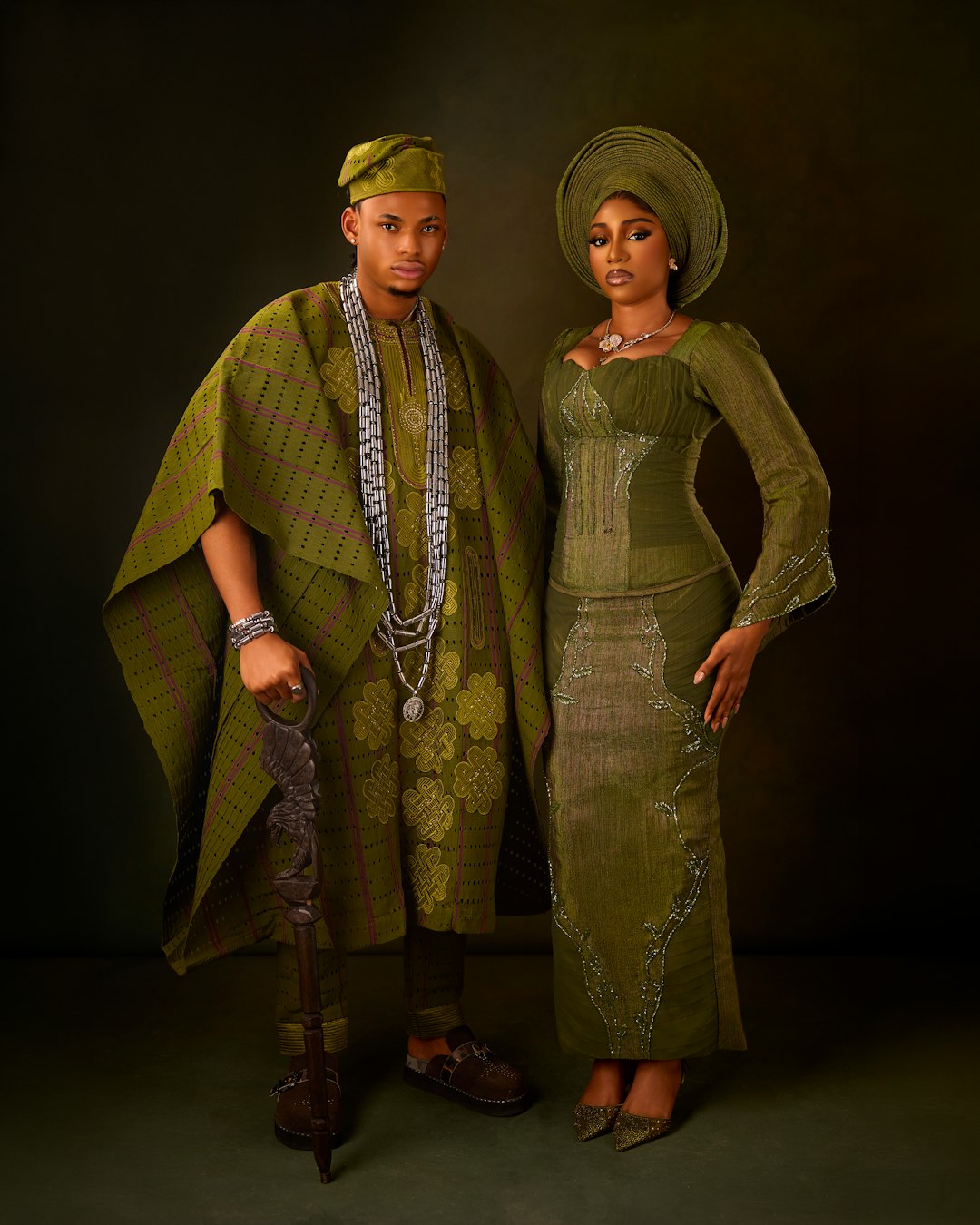
The bride usually wears an aṣọ òkè set with a gèlè, shawl and coral beads, while the groom wears a matching agbádá or buba and sokoto with a fìlà (cap). Guests wear the agreed aṣọ ẹbí. Our guides to women’s attire and men’s attire explain each piece.
Tips for guests
- Arrive on time but expect a flexible schedule.
- Greet elders first. See our guide to greeting elders in Yoruba.
- Bring cash for spraying the couple, if that is the local custom.
Frequently asked questions
What is the bride price in Yoruba culture? It is called owó ìdána and is a symbolic payment that, with the gifts on the list, shows respect to the bride’s family.
Do the bride and groom wear matching outfits? Usually yes, in cloth that complements each other.
Photo: Unsplash contributor, a man and woman in traditional attire, illustrative. Practices vary by family and town; confirm details with the families concerned.