

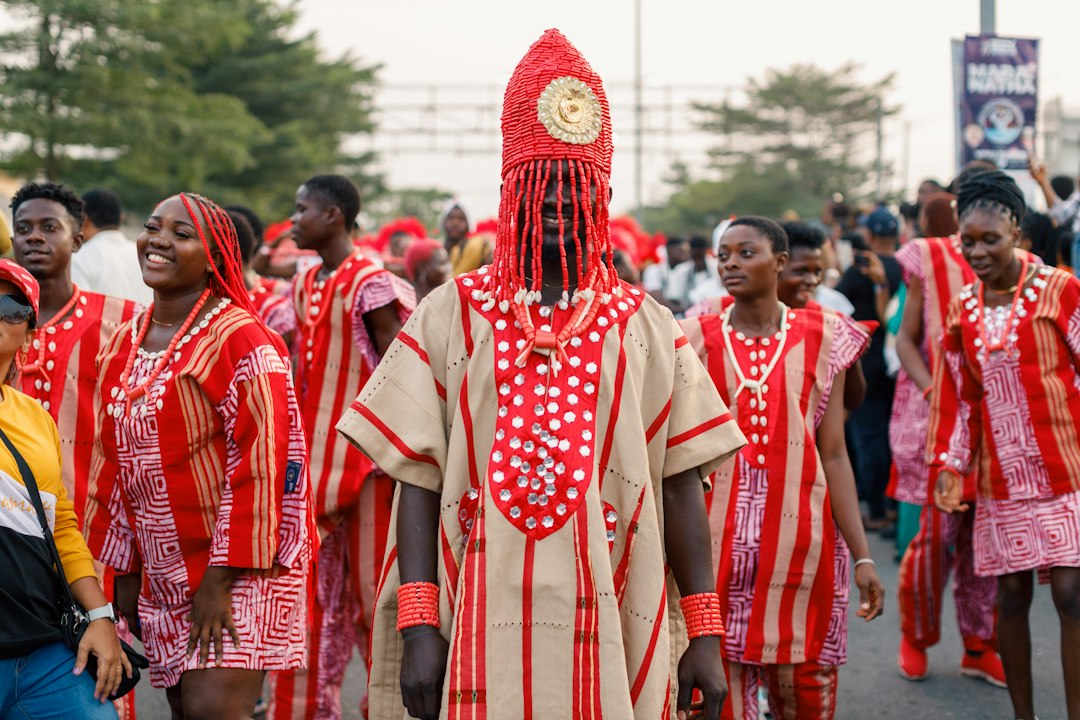
Few peoples have shaped Africa and the wider world like the Yoruba. This list of famous Yoruba people brings together legendary founders, nineteenth-century traders and scholars, independence-era leaders and global artists. Each entry explains who the person was and why they still matter, with links to learn more about the culture behind them.
Legendary and Early Figures
1. Oduduwa
In Yoruba tradition, Oduduwa is the ancestor of the Yoruba kings and the founder of Ile-Ife. His story sits at the heart of Yoruba identity. Read the full account in our guide to the origin of the Yoruba, Oduduwa and Ile-Ife.
2. Moremi Ajasoro
Moremi is a heroine of Ile-Ife remembered in legend for her courage in protecting her people from raiders, at great personal cost. She is celebrated as a symbol of sacrifice and loyalty.
Nineteenth-Century Leaders and Scholars
3. Efunsetan Aniwura
Efunsetan Aniwura was the Iyalode (head of women) of Ibadan, a wealthy trader and farmer who became one of the most powerful women in Yoruba history. She died in 1874.
4. Madam Efunroye Tinubu
Madam Tinubu (c. 1805 to 1887) was an influential trader and political figure in Lagos and Abeokuta, known for her role in the politics of the nineteenth-century Yoruba states.
5. Samuel Ajayi Crowther
Born in Osogun in the early 1800s and enslaved as a boy before being freed, Crowther became the first African Anglican bishop in 1864. He helped write down the Yoruba language and worked on its Bible translation, laying a foundation for written Yoruba. Learn more from his biography, and see why spelling matters in why Yoruba tone marks matter.
Politics and Independence
6. Herbert Macaulay
Herbert Macaulay (1864 to 1946) is often called the father of Nigerian nationalism. He founded the Nigerian National Democratic Party in 1923, the country’s first political party, and challenged colonial rule in Lagos.
7. Funmilayo Ransome-Kuti
Funmilayo Ransome-Kuti (1900 to 1978) was a teacher and women’s rights campaigner from Abeokuta who led the Abeokuta Women’s Union against unfair taxation. She was also the mother of Fela Kuti. Read her story on Wikipedia.
8. Obafemi Awolowo
Obafemi Awolowo (1909 to 1987) led the Action Group and served as Premier of the Western Region, where his government introduced free primary education in 1955. He remains one of the most discussed figures in Yoruba politics. His legacy still shapes debate today, as seen in coverage on Yoruba language in the Lagos governorship race.
Literature, Theatre and Music
9. Hubert Ogunde
Hubert Ogunde (1916 to 1990) is regarded as the father of Yoruba professional theatre. His travelling company staged musical plays in Yoruba and paved the way for the film industry, including Nollywood and Yoruba entertainment.
10. Wole Soyinka
Born in 1934, Wole Soyinka was the first African to win the Nobel Prize in Literature, in 1986. His plays and poems draw heavily on Yoruba mythology and the Orisha tradition. See the official Nobel Prize page and our guide to the Orisha.
11. Fela Anikulapo Kuti
Fela Kuti (1938 to 1997) created Afrobeat, mixing Yoruba rhythms, highlife, jazz and funk with fearless political lyrics. His sound still influences musicians worldwide. Explore the genre in our guide to Yoruba music, from juju to Afrobeat.
12. King Sunny Adé
King Sunny Adé, born in 1946, is one of the greatest juju musicians. His “Synchro System” band, with talking drums and pedal steel guitars, brought Yoruba music to international audiences.
Why Yoruba Legacies Travel So Far
These figures belong to a wider story that stretches from Ile-Ife and the great Oyo Empire to Brazil, the Caribbean, the UK and the USA. Visit the John Randle Centre for Yoruba Culture and History to see that heritage in person, or read how modern voices carry it forward in Ramsey Nouah’s story on Yoruba roots. You can also browse our Artist category for contemporary creatives.
Famous Yoruba People FAQs
Who is the most famous Yoruba person?
There is no single answer. Wole Soyinka, Fela Kuti, Obafemi Awolowo and Funmilayo Ransome-Kuti are among the best known worldwide.
Who was the first African Nobel Prize winner in Literature?
Wole Soyinka, a Yoruba writer, won the Nobel Prize in Literature in 1986.
Who created Afrobeat?
Fela Anikulapo Kuti, with drummer Tony Allen, created Afrobeat in the late 1960s and 1970s.

2 Comments